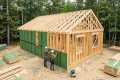
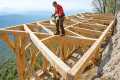
Living the off-grid dream in my hand-built log cabin! Today I’m firing up the wood cook stove to roast a big beef shank low and slow, while working on two big homestead projects. I repair an old shavehorse I built years ago, then use it to shape a couple of longbows. After that I get back to timber framing — cutting mortise and tenon joints for the new maple sugar shack I’m building on the property.
This is real self-reliant living: cooking with wood, using traditional tools, and building with my own hands.
► What should I cook next in the wood stove? Let me know in the comments!
Timestamps: 0:00 - Intro & getting the fires going 2:00 - Seasoning & Roasting the Beef Shank 3:42 - Preparing the vegetables and stock 7:25 - Chaga break on the porch 10:25 - The finished beef shank 11:12 - Repairing My Old Shavehorse 19:23 - Shaping Longbows on the Shavehorse 21:21 - Timber Framing the Maple Sugar Shack 22:55 - Attempting to erect the wall!
#Off grid living #Log cabin #Wood cook stove #Timber frame #Shavehorse #Homestead build #Maple sugar shack #Traditional woodworking #Self reliant living #Bushcraft #WoodStoveCooking Winter is a time for the quiet, deliberate work in the woods. While a beef shank slow-roasts in the iron wood cook stove, I focus on the necessary repairs and crafts on the homestead. My old shavehorse, built years ago, finally needed maintenance before I could return to shaping a couple of longbows and wooden pegs. Using traditional hand tools, I replaced the worn components to ensure the bench remains a reliable partner for my woodworking projects. The main focus of the season is the construction of a new maple sugar shack. I am currently crafting the mortise and tenon joints for the timber frame structure. These traditional joints are designed to breathe and move with the seasons, ensuring the frame remains sturdy long after the first sap begins to flow. There is a deep satisfaction in the rhythm of the chisel, the smell of fresh wood chips, and the warmth of the hearth on a cold day. Welcome to the cabin. YouTube Channels Shawn James: https://www.youtube.com/@ShawnJames33 Rumble: https://rumble.com/c/MySelfReliance
The Architecture of Silence: A Reflection on Self-Reliance Self-reliance is often mistaken for isolation, but in the deep woods of the forest, I’ve learned it is actually a form of radical connection. It isn’t about turning your back on the world; it’s about standing on your own two feet so firmly that you can finally hear what the world is trying to tell you. When I first picked up a broadaxe to notch the logs for the cabin, I wasn't just building a shelter. I was dismantling a dependency. Most of us live in a state of "digital fragility." We rely on invisible grids for our warmth, global supply chains for our food, and glowing screens for our validation. When those systems falter, we realize how little we actually know about the mechanics of our own survival. To be self-reliant is to reclaim that knowledge. It is the quiet, steady work of bridging the gap between a need and its fulfillment. There is a specific kind of honesty found in manual labor. You cannot lie to a log. If your dovetail joint is sloppy, the house will let the cold in. If you don't stack your wood before the first snow, the fire will go out. In the wilderness, the consequences of your actions are immediate and indisputable. This accountability is the foundation of self-reliance. It forces a man to slow down, to respect the grain of the wood, and to understand that time is not something to be "hacked" or "optimized," but something to be lived. People often ask me if I get lonely out here with only Cali for company. The truth is, the silent forest is where I found my clarity. In the city, the noise is so constant that we lose our own frequency. We become echoes of other people’s opinions and anxieties. But when you are miles from the nearest road, responsible for your own water, your own heat, and your own safety, the internal noise begins to settle. You stop performing for an audience and start existing for a purpose. True self-reliance is found in the "Ritual of the Mundane." It’s in the seasoning of a cast-iron skillet, the brewing of pine needle tea, and the sharpening of a tool. These acts are small, but they are sovereign. They represent a life where your hands are in direct contact with your reality. As I look out the cabin window at the treeline, I realize that I am not "conquering" the wild. I am simply learning its language. Self-reliance is the humility to realize that we are part of a greater ecosystem, and the strength to ensure we aren't a burden to it. It is the peace that comes from knowing that, no matter what happens to the grid, the sun will rise, the forest will provide, and I have the tools—and the will—to meet the day. My Self Reliance/Shawn James 200 Manitoba St., Unit 3, Suite 415 Bracebridge, ON P1L 2E2 [email protected]